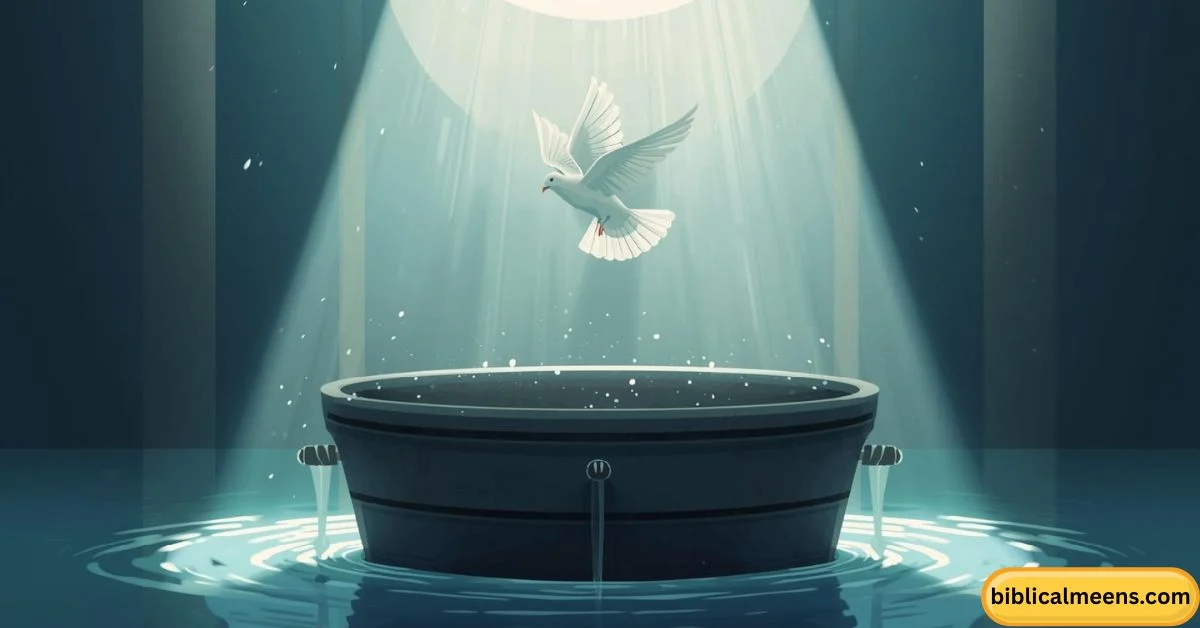
I remember the first time I truly wondered about baptism and salvation. It was during a Sunday service, sitting quietly in the back pew, watching a young family bring their child forward to be baptised. I felt a mix of curiosity and confusion.
Why was this simple act of water so important? Was baptism a guarantee of salvation? Did it mean something deeper? I wasn’t sure—and honestly, I was a little afraid to ask.
Maybe you’ve felt the same. Maybe you’ve wondered what the Bible really says about baptism and salvation, or you’ve wrestled with the idea that one is needed for the other.
If you’re here, reading this, maybe you’re on that same journey, searching for clarity in a world full of mixed messages.
I want you to know you’re not alone. I’ve been there. And together, we can explore what Bible verses about baptism and salvation actually mean—simply, clearly, and without fear.
What Does Baptism Represent?
Baptism, in the Bible, is a symbol—a powerful one. At its core, baptism represents a person’s decision to publicly declare their faith and commitment to God. It is an outward expression of an inward change.
Think of baptism like a doorway. When someone steps through it, they are signalling a new beginning. The water is not magic; it doesn’t save by itself. Instead, it symbolises cleansing, rebirth, and a fresh start—a washing away of the old self and stepping into a new life.
The word “baptism” itself means “to immerse” or “to dip.” In biblical times, it often involved fully immersing a person in water, symbolising death to their old life and rising to new life with Christ.
Core Meaning Explained Clearly
The Bible teaches that baptism is closely connected to salvation, but it’s important to understand that baptism is a response to salvation, not a replacement for it.
Salvation, simply put, is being saved from the consequences of sin and receiving new life in Christ. This happens when a person believes in Jesus—His death, His resurrection, and the forgiveness He offers.
Baptism follows that belief as a public declaration. When the Bible says things like in Acts 2:38, “Repent and be baptized… for the forgiveness of sins,” it’s showing a natural step after repentance and faith.
But it’s faith—the belief and trust in Jesus—that actually saves. Baptism is a powerful symbol of that faith, showing others and yourself that your heart has turned toward God.
Spiritual Meaning
Spiritually, baptism is a sign of God’s protection and new guidance in a believer’s life. It marks a turning point where God’s presence begins to lead and shape your journey.
It’s not about fear or punishment but about entering into a relationship where God watches over you and helps you grow. Baptism is like a promise—a reminder that you are no longer alone in your struggles or decisions.
It speaks to awareness: awareness that you are part of a bigger story, that God is guiding your steps, and that you are protected under His care.
Emotional Meaning
Emotionally, baptism can bring a mix of feelings—relief, joy, sometimes nervousness. It’s normal to feel a little vulnerable when making such a public statement. I’ve felt that myself, and I’ve seen others too.
But baptism can also be deeply reassuring. It’s a moment of letting go of fears and doubts and stepping into confidence. It reminds you that your mistakes don’t define you, and that growth is always possible.
If you’re feeling stressed or unsure about this, know that’s part of the process. The emotional meaning is one of hope and courage.
Psychological Meaning
On a psychological level, baptism can help the mind process change. Rituals, like baptism, give our brains a way to mark transitions. They help us internalise a new identity.
By going through baptism, your mind is recognising: “This is who I want to be now.” It’s a concrete way to reinforce belief and commitment.
This kind of symbolic act can reduce internal conflict and increase feelings of peace and belonging—important for mental health.
Life Situation Meaning
Whether you’re making career choices, navigating relationships, or facing inner doubts, baptism can bring clarity. It can serve as a reminder that you’re not defined by past mistakes or current pressures.
In relationships, baptism can build trust and show others your commitment to living by your values.
In decision-making, it’s a way to say: “I’m choosing a new path.” It’s a steady anchor when life feels uncertain or overwhelming.
Does Baptism and Salvation Mean Something Bad Will Happen?
No. Baptism and salvation do not mean something bad will happen.
If you’re worried or scared, that’s understandable. Sometimes, when we don’t fully understand spiritual things, fear creeps in. But baptism and salvation are about hope and new beginnings, not punishment.
Symbolically, baptism means cleansing and renewal—not fear or doom. Salvation means being rescued and protected, not condemned.
If you’re seeing baptism and salvation through a lens of fear, take a breath. The Bible’s message here is about love, grace, and new life.
Is This a Good or Bad Sign?
It’s a very good sign.
Baptism is a positive step—a sign that you are moving toward healing, growth, and connection with God.
Salvation is the ultimate good news: it means forgiveness, acceptance, and the chance to live with purpose.
Neither baptism nor salvation is neutral or bad. They’re invitations to something better.
Repeated Experience Meaning
If you find yourself returning to thoughts about baptism or salvation, it often means there is an unresolved question or a deeper awareness stirring inside you.
This repetition can be a sign that your heart and mind want clarity, or that you’re searching for meaning.
It’s okay to take your time. The repetition is an invitation to reflect and grow.
Common Variations & Their Meanings
Here are a few common scenarios you might relate to:
- Baptised as a child, but feeling unsure now: This means your personal faith journey is unfolding. Baptism is a symbol, but your belief needs to grow with your understanding.
- Hearing about baptism but not feeling ready: This is normal. Faith is a personal choice, not a race.
- Worrying if baptism saves you even if you struggle: Salvation is about God’s grace, not perfection. Baptism shows your commitment, but it’s faith and God’s love that save.
- Wondering if you need to be baptised again: Some traditions practice “re-baptism” as a personal decision, but it’s not required for everyone.
What Should You Do After This Experience?
Take a deep breath and remember that baptism and salvation are part of a journey, not a single moment that solves everything.
You don’t need to rush. Keep learning, praying, and talking with people you trust.
Focus on living out your faith in simple, everyday ways—kindness, honesty, and hope.
There’s no need for rituals or fear—just steady steps forward.
Myths vs Truth
Myth: Baptism automatically saves you regardless of belief.
Truth: Baptism is a symbol of faith, not a magic ritual.
Myth: If you’re not baptized, you’re lost.
Truth: Salvation depends on faith in Jesus, not just baptism.
Myth: You must be baptised the same way as others.
Truth: Different Christian traditions baptise differently—what matters most is the heart behind it.
Why This Experience Feels So Real
Baptism and salvation touch the heart and mind deeply because they represent transformation. Our brains are wired to respond strongly to rituals and symbols, especially those connected to identity and belonging.
The emotions you feel are real because they connect to your desire for meaning, safety, and connection.
You’re experiencing something profound—a new chapter in your life story.
FAQs About Bible Verses About Baptism and Salvation
1. Does baptism save me?
No, salvation comes through faith in Jesus. Baptism is a public symbol of that faith.
2. Can I be saved without baptism?
Yes. The Bible teaches that faith in Christ is what saves you, not the act of baptism alone.
3. Why does the Bible mention baptism so often?
Baptism is a way for believers to publicly show their commitment and identify with Jesus.
4. What if I’m afraid of baptism?
It’s normal to feel nervous. Remember, baptism is about your faith and relationship with God—not about fear.
5. What if I was baptised as a baby?
Many people are baptised as infants. Your personal faith will grow as you understand and accept that commitment for yourself.
6. Do I need to be baptised again if I wasn’t sure the first time?
Some choose to be baptised again as a personal decision, but it’s not always necessary. Talk with your church or pastor.
7. Is baptism mentioned in the Old Testament?
No, baptism as a Christian practice begins in the New Testament with John the Baptist and Jesus.
8. Can baptism remove sin?
Baptism symbolises the washing away of sin, but forgiveness comes through faith in Jesus.
Closing Thoughts
If you’re wrestling with what baptism and salvation really mean, remember you’re on a path many have walked before. It’s okay to have questions and to feel uncertain.
Baptism is a beautiful, hopeful symbol of new life and commitment. Salvation is God’s gift of love and grace to you.
You are seen, you are loved, and your journey matters. Step forward at your own pace, knowing that this is a story of hope and renewal—one that you are part of, every day.
