Have you ever read about a person in the Bible and wondered how their story ended? I have. Some Bible stories give us many details about a person’s life, but then their death is described in only a few words. Samuel is one of those people.
Samuel was a prophet, judge, and faithful servant of God. He played an important role in Israel’s history. He anointed Saul as king and later anointed David. He also guided God’s people during a time of great change.
So, how did Samuel die in the Bible?
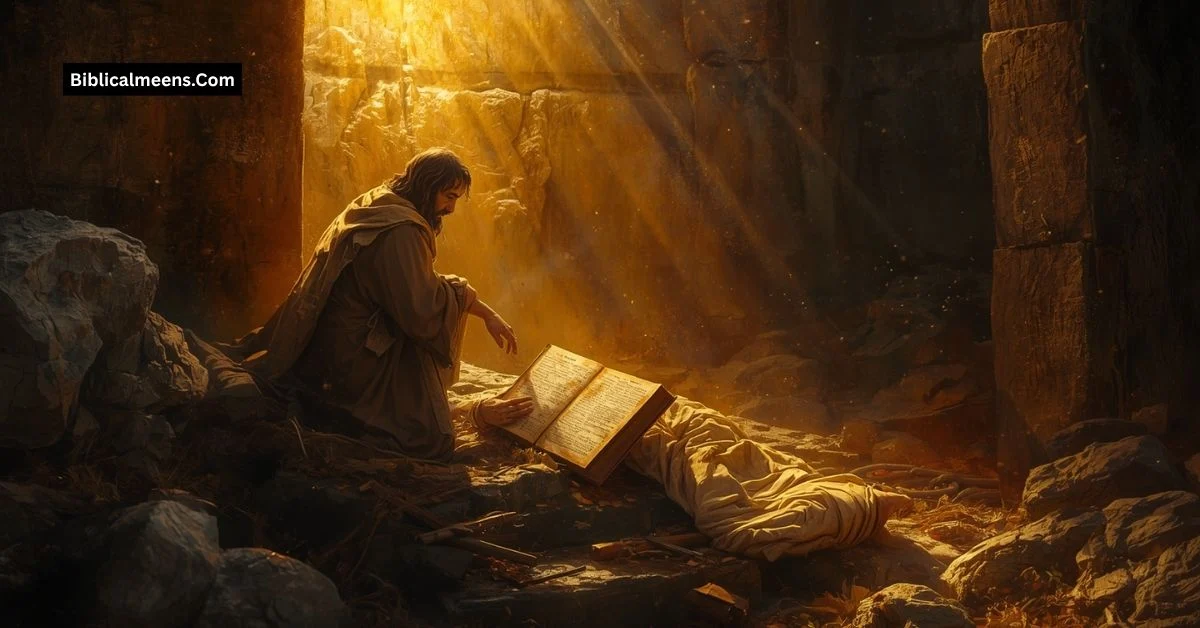
The Bible gives us a simple answer. Samuel died when he was an old man, and all Israel gathered to mourn for him. He was buried in his home at Ramah.
The Bible does not tell us the exact cause of Samuel’s death. It does not say that he was killed, attacked, or died in battle. Instead, Scripture focuses more on his life, his faith, and the effect he had on Israel.
His death also teaches us something important. A faithful life is not measured only by how a person dies. It is also measured by how they walk with God.
Let us look closely at what the Bible says about Samuel’s death and the spiritual lessons we can learn from his life.
How Did Samuel Die in the Bible?
The clearest verse about Samuel’s death is 1 Samuel 25:1:
“And Samuel died; and all the Israelites were gathered together, and lamented him, and buried him in his house at Ramah.”
This verse tells us three important things.
First, Samuel died. Second, Israel mourned his death. Third, he was buried at Ramah, the place connected with his home and ministry.
But there is something the Bible does not tell us: the exact cause of Samuel’s death.
Scripture does not give Samuel’s age at death. It also does not describe a sickness, accident, or violent event that caused his death. Because of this, we should not claim that the Bible gives a specific reason for how he died.
Samuel Died Before Saul’s Final Battle
Samuel’s death happened during a difficult time in Israel.
After Samuel died, the Philistines gathered against Israel. Saul was afraid when he saw their army. He wanted guidance, but the Lord did not answer him through dreams, prophets, or the Urim.
Saul then made a serious mistake. He sought a woman who practiced spirit consultation and asked her to bring Samuel up. This event is recorded in 1 Samuel 28.
This shows how important Samuel had been to Saul. Even after Samuel’s death, Saul still wanted the prophet’s guidance.
Samuel had already warned Saul many times during his life. He had told Saul to obey God and had confronted him when he disobeyed.
Samuel’s death, therefore, was not the end of his influence. His words and faith continued to affect Israel.
Where Was Samuel Buried?
The Bible says Samuel was buried at Ramah.
Ramah was closely connected with Samuel’s life. He had lived there, and it was a place where he served God’s people.
The people gathered together and mourned him. This tells us that Samuel was deeply respected.
His death was not treated as an unimportant event. Israel felt the loss of a man who had served God for many years.
What Does Samuel’s Death Mean Biblically?
The biblical meaning of Samuel’s death is not that God had abandoned him. Instead, it reminds us that even faithful servants of God eventually die.
Samuel lived a life of service.
As a child, he was dedicated to the Lord by his mother Hannah. In 1 Samuel 3, God called Samuel while he was still young. Samuel learned to listen to God’s voice and became a prophet.
Later, he became a judge over Israel.
He also anointed Israel’s first king, Saul. When Saul failed to obey God, Samuel confronted him. Later, God sent Samuel to anoint David.
Samuel’s story shows that God can use one life to influence many generations.
His death also reminds us that our time on earth is limited. We may not know how long we have, but we can choose how we live.
Samuel chose faithfulness.
Samuel’s Death Was Not Described as a Punishment
It is important not to misunderstand the passage.
The Bible does not say Samuel died because of a particular sin or punishment. It simply records his death.
This matters because people sometimes try to find a hidden warning in every biblical death. But Scripture does not always give one.
Samuel’s death should therefore be read with peace and respect, not fear.
His life had already shown his faithfulness to God.
Samuel’s Life Gives More Meaning Than the Details of His Death
The Bible gives much more information about what Samuel did than how he died.
That itself can teach us something.
Sometimes we focus so much on the end of a person’s story that we forget the life they lived.
Samuel listened to God.
Samuel spoke truth.
Samuel served Israel.
Samuel prayed.
Samuel guided kings.
His legacy was built through years of faithfulness.
Spiritual Significance of Samuel’s Death
Samuel’s story carries several spiritual lessons for Christians today.
1. A Faithful Life Has Lasting Influence
Samuel died, but his influence did not disappear.
People remembered him. Israel mourned him. His words continued to matter.
This reminds us that our actions can affect people long after a moment has passed.
A prayer, kind word, faithful decision, or act of courage may have an impact we never see.
2. God Can Use You at Every Stage of Life
Samuel served God as a child, a young man, and an older leader.
His story shows that God’s purpose is not limited to one season of life.
You may feel too young, too old, too weak, or too ordinary. Samuel’s life reminds us that God can work through a willing heart.
3. Death Does Not Erase a Person’s Legacy
Samuel’s physical life ended, but his faithfulness remained part of Israel’s story.
This can bring comfort when we lose someone we love.
Their voice may be gone, but the love they gave, the wisdom they shared, and the good they planted can remain with us.
4. We Should Trust God’s Timing
Samuel’s death was part of the story of Israel’s transition from one generation to another.
David’s future was coming closer. Saul’s reign was falling apart.
Samuel had completed much of the work God had given him.
This teaches us to trust God’s timing, even when we do not understand every part of it.
Biblical Interpretation of Samuel’s Death in Real Life
If you are searching how did Samuel die in the Bible because you recently lost someone, Samuel’s story can offer comfort.
The Bible does not tell us that every death has a hidden message.
Sometimes death is simply part of human life.
What matters is how we respond.
We can grieve. We can remember. We can pray. We can thank God for the life that was shared with us.
Samuel’s death also shows that mourning is natural. Scripture says the Israelites gathered and lamented him.
Grief is not a sign of weak faith.
You can trust God and still miss someone deeply.
If Samuel’s story appears in your thoughts or dreams after a loss, you do not need to assume it is a supernatural prediction. It may simply connect with grief, memory, faith, or your desire for guidance.
Bring those feelings to God in prayer.
Practical Lessons From Samuel’s Life
Samuel’s death leaves us with a simple lesson: we do not control how long we live, but we can choose how faithfully we live.
Listen to God. Speak truth with love. Help others. Pray for wisdom. Stay faithful when life changes.
Most of all, trust God with the things you cannot control.
Conclusion
So, how did Samuel die in the Bible? The Bible says that Samuel died and that all Israel gathered to mourn him. He was buried at Ramah, but Scripture does not tell us the exact cause of his death.
His story is less about the details of his final moment and more about the faithful life he lived.
Samuel listened to God, served His people, and left a lasting legacy. His life reminds us that faithfulness matters, grief is natural, and God’s guidance can be trusted.