Have you ever seen the abbreviation IVF in a text message, a social media post, or a medical discussion and wondered what it means? Understanding abbreviations can be confusing because the same letters may have different meanings depending on the situation.
IVF most commonly stands for In Vitro Fertilization, a medical procedure that helps people become pregnant. It is an important topic in fertility treatment, family planning, and reproductive health. People often search for its meaning after hearing it from a doctor, reading a personal story online, or discussing pregnancy with friends.
However, the meaning of IVF can depend on the context in which it appears. In medical conversations, it usually refers to fertility treatment. On social media, it may appear in discussions about infertility, pregnancy journeys, or starting a family. In professional and technical settings, its interpretation may require additional context.
In this guide, you will learn what IVF means, how it works, where the abbreviation is used, and how it differs from similar terms.
1. IVF Meaning and Definition
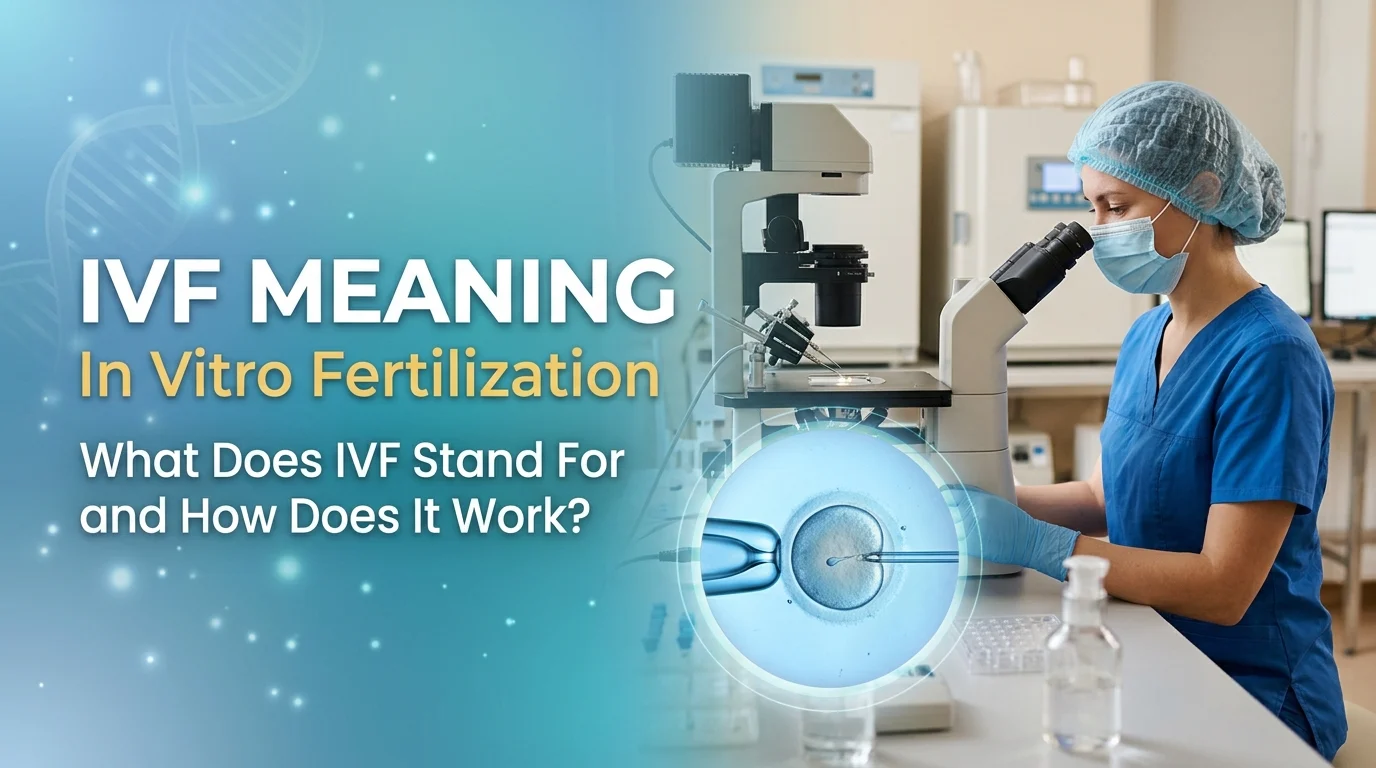
IVF stands for In Vitro Fertilization. It is a fertility treatment in which an egg and sperm are brought together in a laboratory to create an embryo. The embryo may then be transferred into the uterus, where it can potentially implant and develop into a pregnancy.
The phrase in vitro means “in glass,” referring to the laboratory environment in which fertilization takes place.
How does IVF work?
IVF generally involves several steps:
- Ovarian stimulation: Medication encourages the ovaries to develop multiple eggs.
- Egg retrieval: A healthcare professional collects mature eggs from the ovaries.
- Fertilization: Eggs are combined with sperm in a laboratory. In some cases, a single sperm is injected directly into an egg.
- Embryo development: Fertilized eggs are monitored as they develop into embryos.
- Embryo transfer: An embryo may be placed into the uterus.
- Pregnancy testing: A test is performed at the appropriate time to determine whether treatment resulted in pregnancy.
Not every IVF cycle follows exactly the same process. Some embryos may be frozen for future use, and additional testing or procedures may be recommended depending on individual circumstances.
Why do people use IVF?
IVF may be recommended for several reasons, including blocked fallopian tubes, certain sperm-related fertility problems, endometriosis, unexplained infertility, or situations in which other fertility treatments have not worked.
It can also help some people preserve fertility or have a child using donor eggs, donor sperm, or previously frozen embryos.
In simple words: IVF is a medical treatment that helps an egg and sperm meet outside the body, with the aim of establishing a pregnancy.
2. Background and History of IVF
IVF developed through decades of scientific research into human reproduction. Before the treatment became available, many people experiencing certain types of infertility had limited options for having a biological child.
Researchers worked to understand how eggs mature, how sperm fertilizes an egg, and how an early embryo can develop in a controlled laboratory environment.
A major milestone occurred in 1978, when Louise Brown became the first baby born through successful IVF. Her birth in the United Kingdom demonstrated that fertilization outside the human body could lead to a healthy live birth.
This achievement helped establish a new field of fertility medicine. Over time, improvements in laboratory equipment, embryo culture, medication, and clinical techniques made IVF more widely available.
How has IVF changed?
Early IVF treatments were less sophisticated than many modern procedures. Today, fertility clinics can monitor ovarian stimulation, assess embryo development, and use techniques designed to address different reproductive challenges.
One important development is intracytoplasmic sperm injection (ICSI). This procedure involves injecting a single sperm directly into an egg and may be useful for certain cases of male-factor infertility.
Embryo freezing has also changed fertility treatment by allowing suitable embryos to be stored for potential future transfers.
Some clinics offer genetic testing of embryos in specific circumstances. However, such testing has limitations and does not guarantee pregnancy or the birth of a healthy child.
Why is the history important?
Understanding IVF’s background helps explain why the abbreviation appears so frequently in discussions about medicine, fertility, and family planning.
IVF is no longer an unfamiliar experimental procedure. It is an established fertility treatment, although success rates vary based on factors such as age, diagnosis, treatment history, and embryo characteristics.
Despite scientific progress, IVF can involve emotional, physical, and financial challenges. It is best understood as a medical option that may help some people conceive, rather than a guaranteed solution to infertility.
3. IVF Usage in Different Contexts
Although IVF has a widely recognized medical meaning, its usage varies depending on the audience and situation.
In medical settings
Doctors, fertility specialists, nurses, and embryologists use IVF when discussing reproductive treatment. For example:
- “The doctor recommended IVF after reviewing our fertility tests.”
- “We are preparing for our first IVF cycle.”
- “The clinic explained the possible risks and benefits of IVF.”
In these examples, IVF refers directly to In Vitro Fertilization.
In everyday conversations
People may use IVF when talking about pregnancy plans, fertility challenges, or their experiences of becoming parents.
For example:
- “My cousin is considering IVF.”
- “They welcomed their baby after IVF treatment.”
- “We are learning more about our fertility options.”
The abbreviation makes conversations shorter while still communicating a specific medical subject.
In professional fields
IVF is especially common in reproductive medicine, healthcare research, fertility counseling, and medical journalism. It can also appear in insurance documents, treatment estimates, scientific studies, and discussions about reproductive technology.
In professional writing, it is often best to spell out “In Vitro Fertilization (IVF)” the first time the term appears. The abbreviation can then be used throughout the remaining text.
In educational content
Health websites, medical textbooks, and patient information materials frequently explain IVF to help readers understand fertility treatment.
The meaning generally stays the same across these contexts. Unlike many internet abbreviations, IVF is not primarily a slang expression. It is a recognized medical term that has become common in everyday language.
4. IVF Meaning in Chat, WhatsApp, Instagram, and TikTok
On messaging and social media platforms, IVF usually retains its medical meaning. People may use it when discussing fertility treatment, pregnancy updates, family planning, or personal experiences.
IVF meaning in chat
In a private conversation, IVF can refer to someone’s treatment plans or experience with infertility.
Examples:
- “We might start IVF next year.”
- “She shared an update about her IVF journey.”
- “Do you know how much IVF treatment costs?”
The abbreviation helps people discuss a complex medical topic without repeatedly spelling out its full name.
IVF meaning on WhatsApp
WhatsApp messages often involve private discussions between family members, friends, and partners.
For example:
“Hi, the specialist explained the IVF process today. We have a few decisions to make before starting.”
Here, IVF refers to fertility treatment. Because reproductive health can be a sensitive subject, it is important to respect the privacy of anyone discussing it.
IVF meaning on Instagram
On Instagram, IVF may appear in captions, hashtags, educational posts, and personal stories.
Someone might write, “Sharing our IVF journey to support others going through fertility treatment.”
Such posts can help people find support and connect with others who have similar experiences. However, social media stories do not represent every person’s medical journey.
IVF meaning on TikTok
TikTok users may discuss IVF through educational videos, treatment diaries, personal experiences, or explanations of fertility-related terms.
For example, a creator might describe what happens during egg retrieval or explain the difference between embryo transfer and a pregnancy test.
Important: IVF does not have a separate, universally accepted slang meaning on WhatsApp, Instagram, or TikTok. If you encounter it in an unusual context, read the surrounding message before assuming what the sender means.
5. IVF Meaning in Physics, Medical Terminology, and Aircraft Terminology
The abbreviation IVF is most strongly associated with reproductive medicine. Its interpretation in other technical fields depends on the specific document or organization using it.
IVF in physics
IVF is not a universally standard abbreviation for a single fundamental concept in physics. Scientific abbreviations can vary between research papers, equations, laboratories, and specialized subfields.
If IVF appears in a physics article, the surrounding equation, glossary, or first mention should clarify its intended meaning. It would be misleading to assign it one fixed physics definition without that context.
IVF in medical terminology
In medicine, IVF overwhelmingly refers to In Vitro Fertilization.
It is associated with assisted reproductive technology (ART), which includes medical procedures designed to help achieve pregnancy.
Related terms include:
- Embryo: An early stage of development after fertilization.
- Fertility: The ability to reproduce.
- Infertility: A condition involving difficulty achieving pregnancy, assessed according to clinical criteria.
- ICSI: A procedure in which a single sperm is injected directly into an egg.
- Embryo transfer: The placement of an embryo into the uterus.
These terms describe different aspects of fertility care and should not be treated as interchangeable.
IVF in aircraft terminology
IVF is not a universally recognized standard abbreviation for a specific aircraft system or aviation procedure. Aviation uses many specialized abbreviations, and their meanings depend on the applicable manual, operator, or regulatory authority.
If you see IVF in an aircraft maintenance document, flight-related discussion, or technical manual, check the document’s abbreviation list or ask a qualified professional.
The key lesson is that abbreviations should be interpreted within their subject area. In ordinary medical conversations, IVF almost always means In Vitro Fertilization, while an unusual technical use requires verification.
6. Common Misconceptions About IVF
IVF is widely discussed, but several misunderstandings can make it difficult to understand the treatment accurately.
Misconception 1: IVF guarantees pregnancy
IVF can help people become pregnant, but success is not guaranteed. Outcomes vary depending on individual medical circumstances, age, embryo factors, and treatment history.
Misconception 2: IVF and artificial insemination are the same
They are different procedures. IVF involves fertilization in a laboratory. In intrauterine insemination (IUI), prepared sperm is placed directly into the uterus, and fertilization generally occurs inside the body.
Misconception 3: Everyone needs IVF to treat infertility
IVF is only one fertility treatment. Depending on the cause of infertility, other options may include medication, surgery, IUI, or different approaches recommended by a specialist.
Misconception 4: IVF always involves donor eggs or sperm
Not necessarily. IVF can use a patient’s own eggs and a partner’s sperm. Donor eggs, donor sperm, or other options may be used when appropriate.
Misconception 5: IVF always results in twins
IVF does not automatically lead to a multiple pregnancy. The number of embryos transferred and other factors affect this possibility. Transferring a single embryo can reduce the risk of multiple pregnancy.
Misconception 6: IVF is only discussed in hospitals
People also discuss IVF in support groups, online communities, educational videos, and private conversations.
Knowing these facts helps separate medical information from assumptions. Anyone considering fertility treatment should discuss their options, risks, costs, and expected outcomes with a qualified fertility specialist.
7. Similar Terms and Alternatives to IVF
Several reproductive health terms are related to IVF, but each has a distinct meaning.
| Term | Meaning | Main difference |
|---|---|---|
| IVF | In Vitro Fertilization | Fertilization takes place in a laboratory. |
| IUI | Intrauterine Insemination | Prepared sperm is placed inside the uterus. |
| ICSI | Intracytoplasmic Sperm Injection | One sperm is injected directly into an egg. |
| ART | Assisted Reproductive Technology | A broader category of fertility treatments involving eggs or embryos. |
| AI | Artificial Insemination | A general term for placing sperm into the reproductive tract without sexual intercourse. |
| ET | Embryo Transfer | An embryo is placed into the uterus or, in certain procedures, another appropriate location. |
IVF vs. IUI
The main difference is where fertilization occurs. In IVF, an egg is fertilized in a laboratory. In IUI, sperm is placed in the uterus, and fertilization typically occurs inside the body.
IVF vs. ICSI
ICSI is a fertilization technique that may be used as part of an IVF cycle. It is not a completely separate alternative to IVF in the same way that IUI is.
IVF vs. ART
ART is an umbrella term for assisted reproductive technologies. IVF is one type of ART.
These distinctions are useful when reading medical documents, talking with a fertility specialist, or interpreting fertility-related posts online. If you are unsure which procedure someone means, asking for clarification is better than assuming all fertility treatments work in the same way.
8. How to Respond When Someone Mentions IVF
Your response should depend on the situation and your relationship with the person. Since IVF can be a sensitive topic, a respectful and supportive approach is usually best.
If someone shares their IVF plans
You could say:
- “I hope everything goes well for you.”
- “Thank you for sharing that with me.”
- “I’m here if you need someone to talk to.”
These responses show care without making promises about the outcome.
If someone asks what IVF means
A simple explanation is enough:
“IVF stands for In Vitro Fertilization. It is a fertility treatment in which an egg and sperm are brought together in a laboratory.”
You can add more details if the person wants to learn about the process.
If someone shares an IVF success story
Consider responding with warmth:
- “Congratulations! I’m so happy for you.”
- “Thank you for sharing your wonderful news.”
- “Wishing you all the best.”
If someone is struggling with IVF
Avoid making assumptions or offering unsolicited medical advice. Statements such as “Just relax” or “It will definitely work” may unintentionally dismiss their feelings.
Instead, try saying, “That sounds like a lot to go through. I’m here to listen if you want to talk.”
If someone uses IVF in a technical discussion unrelated to fertility, ask what the abbreviation means in that particular context.
9. IVF Meaning in Online Conversations and Dating Apps
IVF may appear on dating apps or in conversations between people discussing long-term relationships, children, and family planning.
In most cases, it still means In Vitro Fertilization rather than a special dating abbreviation.
IVF in dating conversations
Someone might mention IVF when explaining their future family plans, discussing fertility preservation, or talking about previous fertility treatment.
For example:
“Having a family is important to me, and I’m open to learning about different fertility options, including IVF.”
This statement communicates an interest in family planning, but it does not automatically reveal a person’s fertility status or medical history.
IVF in relationship discussions

Partners may discuss IVF when considering pregnancy, exploring medical options, or deciding how to approach infertility together.
These conversations can involve emotional, financial, and practical considerations. Honest communication can help both people understand each other’s expectations.
Should you ask someone about IVF?
If a person mentions IVF voluntarily, you can ask a considerate follow-up question, such as, “Would you like to tell me more about your experience?”
Avoid asking intrusive questions about their diagnosis, reproductive history, or treatment outcomes unless they invite that discussion.
IVF as a dating abbreviation
There is no widely established dating-app meaning of IVF that replaces its standard medical definition. If someone uses it in an unfamiliar way, ask what they mean rather than interpreting it as slang.
In online conversations, context and respect matter just as much as understanding the abbreviation itself.
Conclusion
IVF stands for In Vitro Fertilization, a fertility treatment in which an egg and sperm are brought together in a laboratory to create an embryo. The embryo may then be transferred into the uterus in an attempt to achieve pregnancy.
Although IVF is primarily a medical abbreviation, it also appears in everyday conversations, WhatsApp messages, Instagram posts, TikTok videos, and dating discussions about family planning. Its meaning generally remains the same across these platforms.
It is also important to understand the difference between IVF, IUI, ICSI, and other fertility-related terms. Each describes a different procedure or category of treatment.
If you encounter IVF in an unfamiliar technical context, use the surrounding information to determine its intended meaning. When discussing fertility with someone, be thoughtful and respectful because the subject can be deeply personal.
Ultimately, understanding IVF helps you interpret medical information, communicate more clearly, and approach fertility-related conversations with greater confidence.