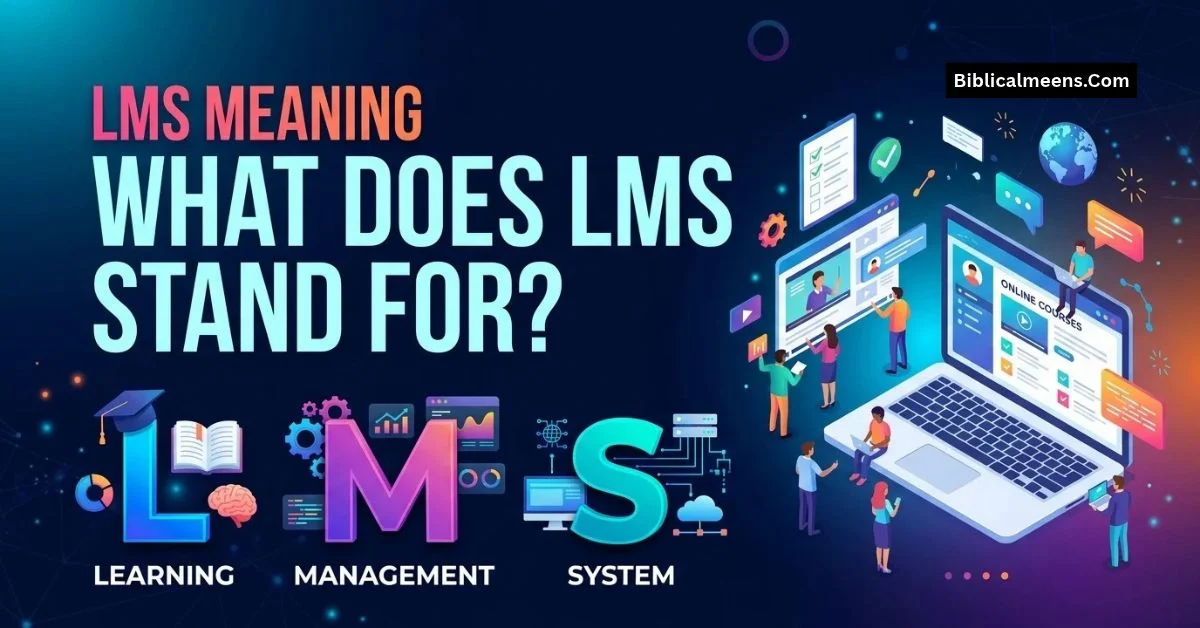
LMS meaning depends on the context. In education and business, LMS usually stands for Learning Management System, software used to create, deliver, manage, and track courses and training. In texting or social media, LMS can also mean “Like My Status” or, in some conversations, “Let Me See.” The surrounding context tells you which meaning is intended.
Key Takeaways
- LMS usually means Learning Management System in education, training, and business.
- An LMS helps organizations manage courses, assignments, assessments, learners, and progress.
- In texting and social media, LMS can mean “Like My Status.”
- In some private chats, LMS can mean “Let Me See.”
- The easiest way to understand LMS is to look at where and how it is being used.
What Does LMS Mean?
LMS is an abbreviation with more than one meaning. The most important definition depends on the situation.
In schools, colleges, universities, and workplaces, LMS means Learning Management System. It refers to software that helps organizations manage online education and training. An LMS can be used to deliver lessons, organize courses, track learner activity, administer assessments, and maintain learning records. Cambridge Dictionary also defines LMS as an abbreviation for Learning Management System.
For example, a college student might hear:
“Your assignment is available in the LMS.”
Here, LMS clearly means the school’s online learning platform.
But if you see “LMS” in a social media caption or casual message, the meaning can be different. In texting, LMS is commonly used as “Like My Status.” Some people also use it to mean “Let Me See.”
So, when someone asks, “What does LMS mean?”, the best answer is: it depends on the context.
LMS Meaning in Education and Business
The most established meaning of LMS is Learning Management System.
An LMS is a software platform designed to help manage learning. Schools can use it to organize digital courses and student work, while companies can use it for employee training and professional development.
According to NIST, LMS is an abbreviation for Learning Management System, and the term is used in the context of education and training technology.
A typical LMS may allow an organization to:
- Create and organize courses
- Upload videos, documents, and lessons
- Enroll students or employees
- Give assignments and quizzes
- Track course completion
- Record grades or assessment results
- Monitor learner progress
- Provide training materials
- Generate learning reports
For example, a company could use an LMS to give new employees an online safety course. Employees log in, complete lessons, take a quiz, and have their progress recorded by the organization.
What Does an LMS Do?
Think of an LMS as a central online place for learning and training.
Instead of keeping lessons, assignments, tests, and progress records in separate systems, an LMS can bring many of these activities together.
For a student, it might be the place where they:
- Log in to a course.
- Read or watch a lesson.
- Download study materials.
- Submit an assignment.
- Take a quiz.
- Check their progress or grades.
For an employee, the process may involve completing required workplace training and tracking certifications or course completion.
Modern LMS platforms can serve both educational institutions and businesses. SAP, for example, describes an LMS as software used to plan, deliver, and track educational and training programs.
Common LMS Features
Although different platforms have different features, many LMS systems include similar tools.
| LMS Feature | What It Does |
|---|---|
| Course management | Organizes lessons and learning materials |
| Assignments | Lets learners submit coursework |
| Quizzes | Tests knowledge and understanding |
| Progress tracking | Shows how much of a course is completed |
| User management | Helps manage students, employees, and instructors |
| Reports | Provides information about learning activity |
| Certificates | Can record or issue proof of course completion |
Not every LMS includes exactly the same features, but these functions are common in learning and training environments.
How Does an LMS Work?
The basic process is fairly simple.
An administrator or instructor creates a course and adds learning materials. Learners are then enrolled in the course and receive access to the available content.
Depending on the platform, learners may watch videos, read documents, complete assignments, participate in discussions, or take assessments.
The LMS records relevant activity so instructors, administrators, or training managers can monitor progress.
For example:
Teacher → Creates course → Adds lessons → Enrolls students → Students complete work → LMS records progress
This makes an LMS useful when many people need to complete organized learning activities.
An LMS can be cloud-based or hosted by an organization, depending on the software and its setup. Educational and corporate LMS platforms may have different priorities even though they share the same basic purpose.
LMS Meaning in Text and Social Media
Now comes the other important meaning of LMS.
If you saw “LMS” in a text message, comment, caption, or social media post, it may not have anything to do with online education.
In casual social media language, LMS commonly means “Like My Status.” It is a request for someone to like or interact with a person’s post, status, photo, or update.
For example:
“New pics are up. LMS!”
This means something like:
“New pictures are posted. Like my status/post!”
Another example is:
“LMS if you agree!”
The person is asking others to like the post if they agree.
LMS as “Like My Status”
“Like My Status” is particularly associated with social-media slang and older status-based social networking culture.
You might see:
- “LMS if you agree.”
- “New profile pic, LMS!”
- “LMS for a rating.”
- “LMS for a shoutout.”
- “Just posted something new. LMS!”
The exact wording can vary, but the purpose is usually to encourage engagement.
It is casual internet slang, so it would not normally be appropriate in a formal email, business report, or academic paper.
LMS as “Let Me See”
LMS can also mean “Let Me See” in some private conversations.
For example:
Person A: “I bought a new jacket.”
Person B: “LMS!”
Here, LMS means:
“Let me see!”
Another example:
Person A: “I have the screenshot.”
Person B: “LMS.”
In this context, the person is asking to see the screenshot.
This meaning is different from “Like My Status,” which is why the surrounding conversation matters. Current slang-focused search results commonly identify both meanings in casual digital communication.
LMS Meaning: Education vs. Texting
The easiest way to understand LMS is to look at the words around it.
| Context | LMS Meaning | Example |
|---|---|---|
| School | Learning Management System | “Submit your homework through the LMS.” |
| College | Learning Management System | “The lecture is posted on the LMS.” |
| Workplace | Learning Management System | “Complete the safety course in the LMS.” |
| Social media | Like My Status | “New photo! LMS.” |
| Private chat | Let Me See | “You got a new phone? LMS!” |
This simple comparison can usually tell you which definition applies.
If someone is talking about classes, courses, assignments, training, grades, or lessons, LMS almost certainly means Learning Management System.
If someone is talking about posts, photos, likes, or social media engagement, it may mean Like My Status.
If someone asks to see something you mentioned, “Let Me See” may make more sense.
What Is an LMS Used For?
For Schools and Colleges
Educational institutions can use an LMS to organize online or blended learning.
A student might use an LMS to access:
- Course lessons
- Lecture materials
- Assignments
- Quizzes
- Grades
- Announcements
- Discussion activities
Some platforms also support communication between instructors and students.
For Businesses
Companies can use an LMS for employee education and training.
For example, a business may create courses covering:
- New employee orientation
- Workplace safety
- Compliance training
- Product knowledge
- Professional development
- Technical skills
The company can then track which employees have completed required training.
This makes the LMS useful beyond traditional classrooms. Corporate LMS platforms are specifically designed to support workplace learning and employee development.
Common Examples of LMS Use
Imagine a university professor creates an online course.
The professor uploads lecture slides and videos to the LMS. Students log in, study the material, submit assignments, and take quizzes. The instructor can then review submissions and monitor progress.
Now imagine a company hiring 100 new employees.
Instead of giving each employee separate training documents, the company can place required courses in an LMS. Employees complete the lessons online, and the organization can keep track of completion.
These are two different situations, but both demonstrate the central idea of an LMS: organizing and managing learning in one digital environment.
Frequently Asked Questions About LMS
What does LMS stand for?
In education and business, LMS stands for Learning Management System. It is software used to manage, deliver, and track education or training. In texting and social media, however, LMS can have different meanings, including “Like My Status.”
What does LMS mean in education?
In education, LMS means Learning Management System. It is an online platform where students and instructors can access courses, lessons, assignments, assessments, announcements, and other learning materials.
What does LMS mean in text?
In casual texting, LMS can mean “Like My Status” or “Let Me See,” depending on the conversation. “Like My Status” is more associated with social-media engagement, while “Let Me See” can appear when someone wants another person to show them something.
Is LMS only used by schools?
No. LMS platforms are also widely used for workplace training and employee development. Businesses can use them to deliver training, monitor completion, organize learning materials, and track employee progress.
How does an LMS work?
An LMS typically lets an administrator or instructor create courses, add learning materials, enroll users, deliver assignments or assessments, and track progress. Learners log in and complete the required activities through the platform.
Is LMS the same as an online course?
No. An online course is the learning content, while an LMS is the software used to manage that learning. An LMS can contain one course or many courses and may also manage learners, assignments, assessments, and progress.
Conclusion
The meaning of LMS depends on where you encounter it. In schools, colleges, and workplaces, the most important definition is Learning Management System—software designed to organize, deliver, and track learning and training.
In texting and social media, LMS can have a completely different meaning. It may mean “Like My Status” when someone wants engagement with a post, or “Let Me See” when someone is asking to see something.
When you see LMS, don’t rely on the three letters alone. Look at the surrounding words and the situation. If the conversation is about courses or training, think Learning Management System. If it is a casual social-media conversation, check whether “Like My Status” or “Let Me See” fits better.