
Have you ever made a mistake and wondered if God could still love you? Many people ask this question when they feel guilty, weak, or unworthy of forgiveness. The Bible meaning of grace offers a beautiful answer. Grace is God’s undeserved love, favor, and kindness toward humanity. It reminds us that we do not have to earn God’s love through perfect behavior. Instead, God offers His grace because of His goodness and mercy.
Grace is one of the most important themes in the Bible. It appears throughout Scripture and reveals God’s desire to forgive, restore, and guide His people. Christians especially connect grace with Jesus Christ, whose life, death, and resurrection demonstrate God’s love for sinners.
Understanding grace can strengthen your faith, bring peace to your heart, and help you treat others with kindness. Whether you are studying Scripture or seeking spiritual comfort, learning about grace can help you understand God’s character and His wonderful gift of salvation.
1. Meaning and Definition of Grace in the Bible
The Bible meaning of grace refers to God’s undeserved favor toward people. It is a gift that comes from His love and goodness, not something people can earn through their own efforts.
In simple words, grace means receiving God’s kindness even when we have not earned it. It shows that God is willing to forgive, help, and restore people who turn to Him in faith.
Grace is closely connected to forgiveness, salvation, mercy, and spiritual growth. Although these words share similar ideas, each has a slightly different meaning.
- Grace: God freely gives His favor and kindness.
- Mercy: God shows compassion and does not give us the punishment we deserve.
- Forgiveness: God releases us from the guilt of our sins when we repent and seek His forgiveness.
- Salvation: God rescues people from sin and offers eternal life through Jesus Christ.
What Does the Bible Say About Grace?
One of the clearest verses about grace is Ephesians 2:8–9:
“For by grace are ye saved through faith.” — Ephesians 2:8, KJV
This passage teaches that salvation is a gift from God. People cannot earn it by performing good deeds or following religious rules alone. Instead, salvation comes through God’s grace and is received through faith.
Another important verse is Romans 3:24, which explains that people are justified freely by God’s grace through the redemption found in Jesus Christ.
These verses show that grace is not a reward for being perfect. It is God’s gift to people who need His love and salvation.
What Is the Simple Meaning of Grace?
In everyday language, grace can mean kindness, patience, or elegance. However, its biblical meaning goes deeper. It describes God’s loving favor toward humanity.
For example, imagine someone who has made a serious mistake but sincerely turns to God in repentance. The message of grace is that failure does not have to be the end of that person’s spiritual journey. Through Christ, forgiveness and a new beginning are possible.
The central message of biblical grace is that God’s love is a gift, not a prize for perfect people.
2. Biblical Background and Origin of Grace
Grace is an important theme throughout both the Old and New Testaments. Although Christians often connect grace with Jesus Christ, the idea of God showing favor and kindness appears from the beginning of the Bible.
In the Old Testament, the Hebrew word often translated as grace is chen. It can describe favor, acceptance, or kindness. In the New Testament, the Greek word charis commonly means grace, favor, or a freely given gift.
These words help explain how biblical writers describe God’s relationship with humanity.
Grace in the Old Testament
One example appears in Genesis 6:8:
“But Noah found grace in the eyes of the LORD.” — Genesis 6:8, KJV
Noah lived in a time when the Bible describes widespread wickedness. Yet he found favor in God’s eyes. This passage introduces an important theme: God can show favor to people even in difficult and troubled circumstances.
Another example appears in Exodus 34:6, where God describes Himself as merciful, gracious, patient, and abundant in goodness and truth.
This description reveals that grace is part of God’s character. He is not presented only as a judge but also as a compassionate God who shows patience and love.
Grace in the New Testament
Grace becomes especially clear through the life and work of Jesus Christ.
John 1:14 describes Jesus as full of grace and truth. John 1:16–17 also connects the fullness of grace with Jesus Christ.
Through Jesus, Christians understand God’s grace as the foundation of salvation. His sacrifice provides the way for people to be reconciled to God.
Titus 2:11–12 explains that God’s grace brings salvation and teaches believers to reject ungodliness and live righteous lives.
This passage is important because it shows that grace does more than forgive sin. It also helps believers grow spiritually and make better choices.
Why Is Grace Important in Christianity?
Grace reminds Christians that their relationship with God depends on His love rather than their ability to live without mistakes.
It encourages humility because no one can claim to earn salvation. It also creates hope because people can seek forgiveness and begin again.
From Genesis to Revelation, the Bible presents God as faithful to His promises and loving toward His people. Grace helps Christians understand that love, forgiveness, and salvation are central to His relationship with humanity.
3. Spiritual Significance of Grace

Grace has deep spiritual significance because it changes how Christians understand God, themselves, and other people.
It reminds believers that they are loved even when they feel weak or unworthy. It also encourages them to grow in faith, forgive others, and show kindness without expecting a reward.
Grace Brings Forgiveness and Hope
Everyone makes mistakes. Sometimes people carry guilt from past decisions or believe they have failed too many times to receive forgiveness.
The Bible presents grace as a reason for hope. Through repentance and faith in Jesus Christ, people can seek forgiveness and move toward a renewed relationship with God.
Romans 5:8 explains that God demonstrated His love for humanity through Christ’s death while people were still sinners.
This message teaches Christians that God’s love is not limited to those who already appear perfect.
Grace Gives Strength During Difficult Times
Grace is also connected with strength in weakness.
In 2 Corinthians 12:9, God tells Paul:
“My grace is sufficient for thee: for my strength is made perfect in weakness.” — 2 Corinthians 12:9, KJV
Paul’s experience teaches that God’s grace can sustain believers through suffering, limitations, and challenges.
This does not mean that Christians will never experience pain. Instead, it encourages them to trust God for strength when life feels overwhelming.
Grace Teaches Us to Love Others
Receiving grace should influence how believers treat other people.
When Christians understand that they depend on God’s forgiveness, they can become more patient and compassionate toward others. They can choose forgiveness over revenge, kindness over cruelty, and humility over pride.
Grace does not mean accepting harmful behavior without boundaries. Rather, it encourages love, wisdom, and a willingness to seek peace whenever possible.
The spiritual lesson of grace is simple: receive God’s love with gratitude and extend kindness to others.
4. Grace in Everyday Life and Christian Practice
Although grace is a biblical concept, it has practical meaning in everyday situations. Christians often use the word when discussing forgiveness, prayer, relationships, salvation, and personal growth.
Grace in Prayer
People may thank God for His grace during prayer. They might ask for grace to face a difficult decision, handle a stressful situation, or respond patiently to someone who has hurt them.
In this context, asking for grace means seeking God’s help, favor, and strength.
Grace in Relationships
Grace can influence how people respond to mistakes in their families, friendships, and marriages.
For example, a friend may say something hurtful and later apologize sincerely. Showing grace could mean listening, responding with kindness, and considering forgiveness rather than immediately seeking revenge.
However, grace does not require someone to remain in an unsafe or abusive relationship. Forgiveness and healthy boundaries can exist together.
Grace at Work or School
A Christian may show grace by being patient with a coworker who makes an honest mistake, helping a struggling student, or treating someone respectfully despite disagreement.
These actions do not earn God’s grace. Instead, they reflect gratitude for the grace believers believe they have already received.
Grace During Personal Failure
Imagine someone who has made a poor decision and feels ashamed. Rather than giving up, that person can acknowledge the mistake, seek forgiveness, make necessary changes, and trust God for guidance.
Grace encourages responsibility without hopelessness.
It does not tell people that their choices do not matter. It reminds them that failure can become an opportunity for repentance, learning, and spiritual growth.
In this way, grace is not simply a word to understand. It is a truth that Christians seek to live out through faith, humility, and love.
5. Common Misconceptions About Biblical Grace
Although grace is central to Christianity, people sometimes misunderstand what it means.
Misconception 1: Grace Means Sin Does Not Matter
Grace does not mean that every action is acceptable. Romans 6:1–2 rejects the idea that people should continue living in sin so that grace may increase.
Biblical grace offers forgiveness while also calling believers toward a changed life.
Misconception 2: We Can Earn Grace Through Good Works
Good works are important in Christian living, but the Bible teaches that salvation is a gift of grace.
Ephesians 2:8–10 explains both sides of this teaching: believers are saved by grace through faith, and they are created in Christ Jesus for good works.
Good deeds are therefore a response to grace, not a way to purchase salvation.
Misconception 3: Grace Is Only for Perfect Christians
Grace is not reserved for people who never struggle. It is especially meaningful because human beings are imperfect and need God’s forgiveness and help.
Christians continue to depend on grace as they learn, repent, and grow in faith.
Misconception 4: Showing Grace Means Ignoring Harm
Showing grace does not require people to excuse wrongdoing or remove reasonable boundaries.
A person can choose compassion while still addressing harmful behavior, seeking justice, or protecting themselves and others.
Understanding these differences helps believers appreciate grace without confusing it with carelessness, weakness, or the absence of accountability.
6. Grace, Mercy, and Forgiveness: What Is the Difference?
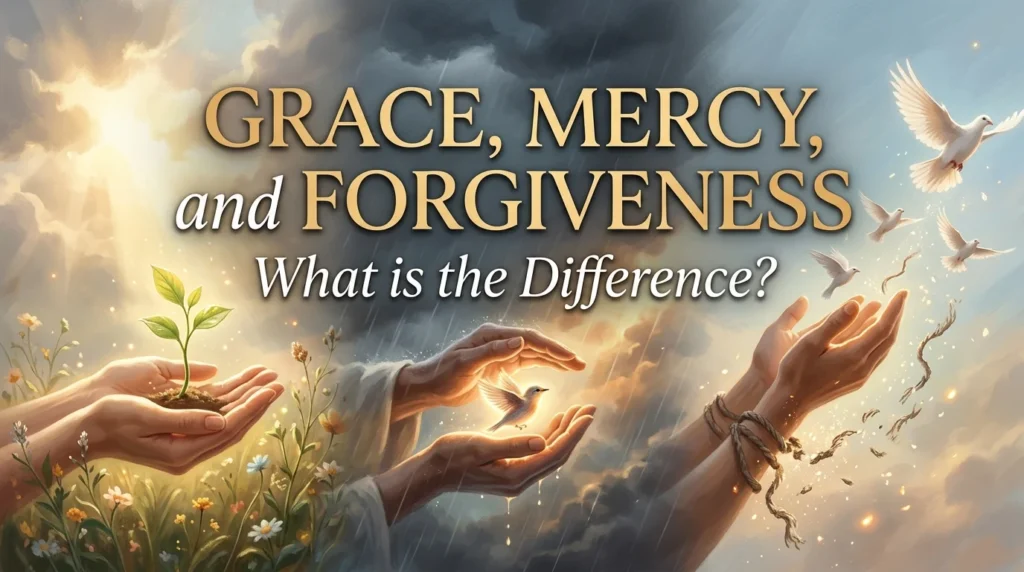
Grace, mercy, and forgiveness are closely related biblical concepts, but they emphasize different aspects of God’s love.
| Term | Simple meaning | Biblical emphasis |
|---|---|---|
| Grace | Receiving God’s undeserved favor | God’s freely given kindness and salvation |
| Mercy | Receiving compassion when we deserve judgment | God’s patience and compassion |
| Forgiveness | Being released from the guilt of sin | Reconciliation and restored relationships |
| Love | Seeking another person’s good | God’s enduring care for humanity |
For example, grace is seen in God’s gift of salvation through Jesus Christ. Mercy is reflected in His compassion toward sinners. Forgiveness describes the release from sin’s guilt, while love provides the foundation for these expressions of God’s goodness.
These concepts work together, but they are not identical.
Understanding them can help readers study Bible passages more carefully and recognize the different ways Scripture describes God’s relationship with people.
7. Bible Verses About Grace and Their Meanings
Several Bible verses explain grace in ways that can encourage Christians in daily life.
- Ephesians 2:8–9: Salvation comes through grace and faith, not as a reward for human works.
- Romans 3:24: Believers are justified freely by God’s grace through the redemption found in Christ.
- 2 Corinthians 12:9: God’s grace provides strength during weakness and difficulty.
- Titus 2:11–12: Grace brings salvation and teaches believers to live in a godly way.
- Hebrews 4:16: Believers are encouraged to approach God’s throne with confidence to receive mercy and find grace in times of need.
- Romans 5:20: God’s grace is greater than the increase of sin, highlighting the abundance of His provision.
These passages offer different perspectives on grace. Some focus on salvation, others on strength, and others on how grace shapes a believer’s life.
When reading them, consider the surrounding verses and the situation being discussed. This helps prevent misunderstanding and reveals how each passage contributes to the Bible’s larger message.
8. How to Respond to God’s Grace
Understanding grace can inspire a meaningful response. Christians do not respond by trying to repay God as if His love were a financial debt. Instead, they respond through faith, gratitude, repentance, and loving actions.
Here are five practical ways to respond to grace:
- Trust God: Remember that salvation is grounded in God’s grace through Jesus Christ.
- Practice repentance: Admit your mistakes and turn away from sinful behavior.
- Show gratitude: Thank God for His love, forgiveness, and guidance.
- Forgive wisely: Be willing to release resentment while maintaining healthy boundaries when necessary.
- Serve others: Show compassion through honest, helpful, and loving actions.
You can also pray for a deeper understanding of grace. Ask God to help you recognize His goodness, grow in faith, and treat others with patience.
The goal is not to become perfect overnight. It is to keep growing in your relationship with God and allow His grace to shape your choices.
Conclusion
The Bible meaning of grace reveals one of Christianity’s most comforting truths: God offers His undeserved favor, love, and salvation through Jesus Christ. Grace reminds us that our mistakes do not have to define our future and that forgiveness and spiritual growth are possible through faith.
From Noah finding favor with God to the saving work of Jesus, grace appears throughout Scripture as an expression of God’s goodness. It gives believers hope during difficult seasons, strength in weakness, and encouragement to live with humility and compassion.
Grace does not mean ignoring sin or avoiding responsibility. Instead, it invites people to receive God’s love, turn away from wrongdoing, and grow in faith. As you study Bible verses about grace, remember that it is both a gift to receive and a truth that can shape how you treat others.
Ultimately, God’s grace points Christians toward a life of gratitude, forgiveness, faith, and love.